

6 Ways To Achieve Customization In Industrial Filters
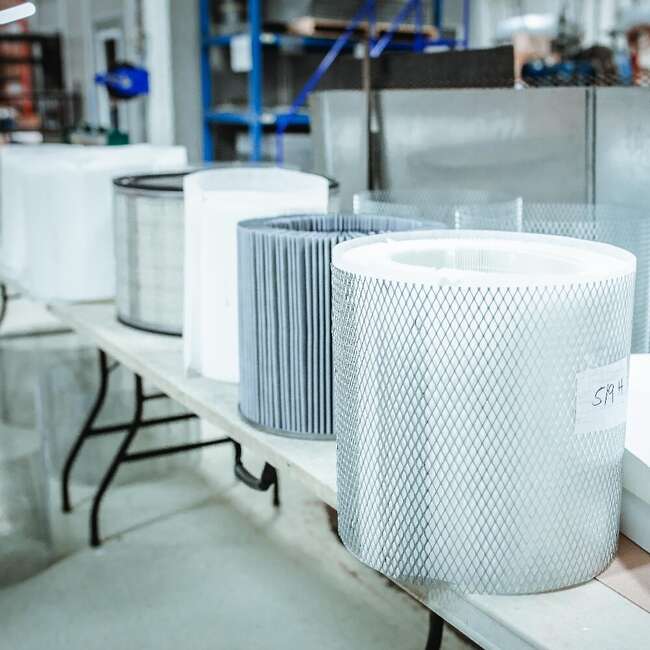
To make the best custom filters, the 6 most common techniques used include 3D printing technology, IoT integration, variable pore size design, electrostatic enhancement, self-cleaning mechanism and multi-stage filtration system. Dynamic Filtration Ltd., a leading manufacturer of industrial filters and filter elements in Waterloo, Ontario, explores these 6 techniques in detail.
What Methods Are Used To Customize Industrial Filters?
3D Printing
3D printing technology allows manufacturers to make unique and intricate designs as required in custom filters. Therefore, in cases where an intricate or specialized design is required, 3D printing can help improve performance and filtration efficiency.
IoT Integration
Another way of customization in industrial filters is by integrating modern technology, such as the Internet of Things (IoT). This provides the users with the ability to track their performance and efficiency in real-time.
Variable Pore Size
Custom filters can be manufactured to have elements with variable pore sizes. This becomes invaluable in situations where contaminant sizes are not constant and vary according to different situations. Thus, the element can be swapped with different pore sizes as required.
Electrostatic Enhancement
Electrostatic enhancement is an advanced technique used to improve the filtration performance of industrial filters. The filter element is imbued with an electrostatic charge, allowing it to capture particles more effectively than traditional filtration methods might.
Self-Cleaning Mechanism
Most industrial filters become disposable due to the accumulation of contaminants over time, leading to a significant pressure drop. However, by making custom filters with a self-cleaning mechanism, their lifespan can be extended. Classic examples include electrostatic or vibration-based mechanisms for self-cleaning.
Multi-Stage Filtration
To combat multiple types of contaminants within an environment, filters can also be customized in the form of multi-stage filters. By integrating multiple layers of filters, particles of various sizes and properties can be removed from the air, making the filtration process more streamlined.
Conclusion
By using any of these 6 methods stated above, it is possible to achieve a fully-functioning custom filter that can outperform its standard counterparts.
To learn more about industrial filters and types of filter elements, reach out to us at Dynamic Filtration Ltd. As a proud manufacturer of industrial filters in Waterloo, Ontario, our collection includes pleated air filters, panel filters, welding filters, concrete filters, custom filters, and more. For more details, contact us at 519-886-0749 today.
FAQs:
What are the design considerations for custom air filter manufacturing?
The main design considerations for custom filter manufacturing include filter design, material selection, micron rating, performance rating and cost-efficiency.
Why is regulatory compliance necessary in industrial filter manufacturing?
Regulatory compliance is necessary as it ascertains a certain quality during air filter manufacturing ensures it meets safety, environmental and performance standards.